Claude Capybara vs Gemini: Where Each Model Leads
Claude Capybara and Google Gemini represent fundamentally different approaches to frontier AI. Capybara — the first model in Anthropic’s new tier above Opus — was designed with cybersecurity and deep reasoning as primary strengths. Google’s Gemini models prioritize multimodal capabilities, massive context windows, and integration with Google’s ecosystem. Our cybersecurity advantages guide explores this in depth.
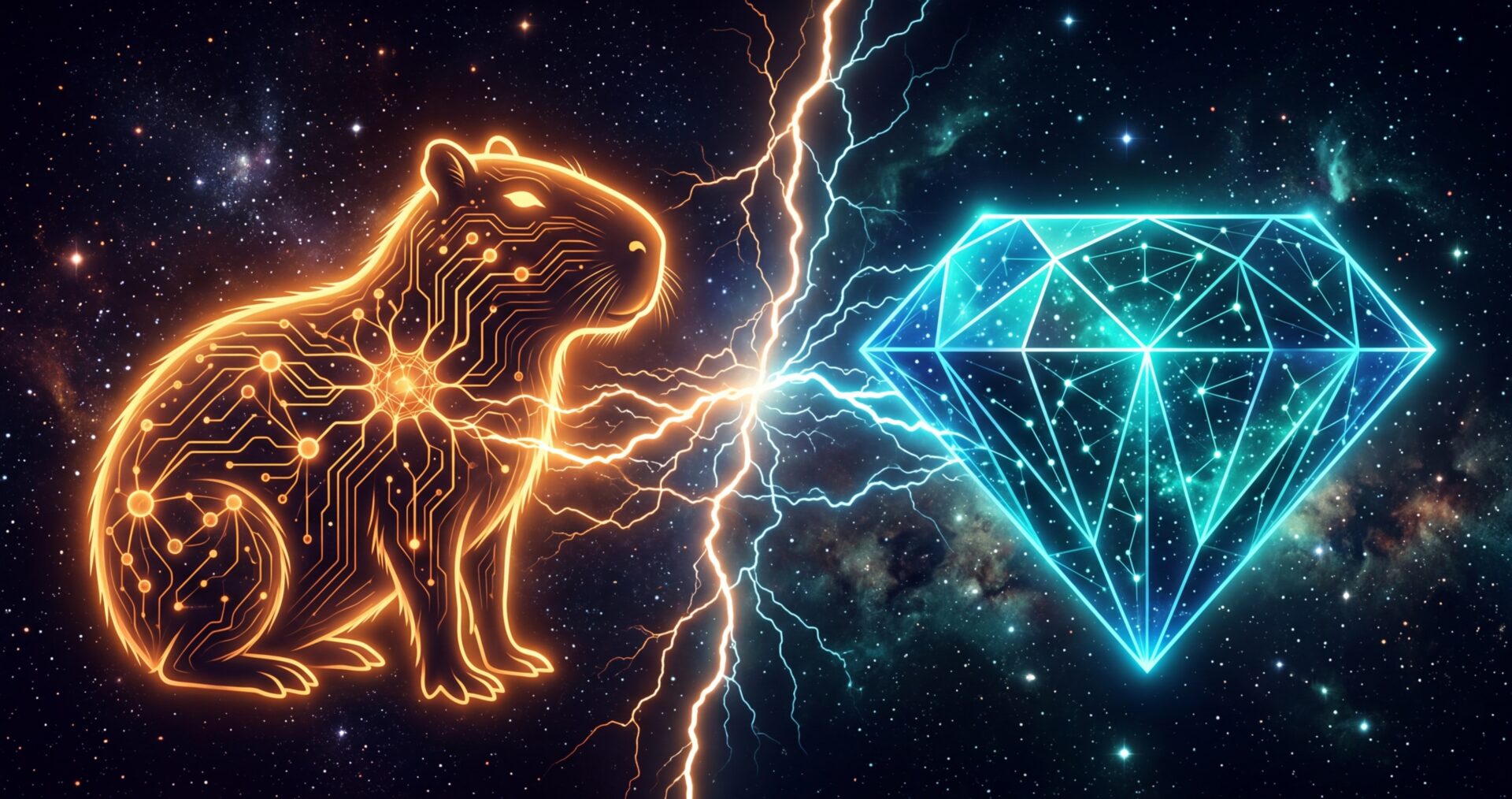
This comparison covers what each model does best, where they overlap, and how to choose between them for specific tasks.
The Models Being Compared
Google’s Gemini lineup and Anthropic’s Claude lineup have different structures, so comparing “Capybara vs Gemini” requires specifying which Gemini.
Anthropic’s Side: Claude Capybara (Mythos)
Capybara is the first model in a new tier above Opus. Leaked documents describe it as a “step change” with “dramatically higher scores” in coding, reasoning, and cybersecurity. It is not publicly available — restricted to cybersecurity defense organizations as of March 2026.
Google’s Side: Gemini 2.5 Pro and Ultra
Gemini 2.5 Pro is Google’s current flagship, excelling in multimodal tasks, long-context understanding, and Google ecosystem integration. Gemini Ultra (when available) targets the highest capability applications. Both benefit from Google’s infrastructure advantages — massive training data, custom TPU hardware, and integration with Search, YouTube, and other Google products.
Capability Comparison
Coding
Capybara reportedly achieves “dramatically higher” coding scores than Opus 4.6, which already leads most coding benchmarks at 80.8% SWE-Bench Verified. The improvement extends to large codebase refactoring, multi-language generation, and autonomous coding workflows.
Gemini 2.5 Pro performs competitively on coding benchmarks and has strong multimodal coding capabilities — it can analyze screenshots of UIs and generate matching code, understand diagrams, and work with visual specifications. Where Gemini has a unique advantage is in tasks that combine visual understanding with code generation.
For pure code-to-code tasks, Capybara likely leads based on leaked benchmark claims. For tasks that involve visual inputs — UI development from mockups, diagram-to-code conversion — Gemini’s multimodal strengths may give it an edge.
Reasoning
Capybara is “significantly improved” over Opus 4.6 (which already leads at 91.31% GPQA Diamond) and introduces cross-domain reasoning — synthesizing insights across different knowledge areas.
Gemini 2.5 Pro has strong reasoning capabilities, particularly when combined with its long context window. It can process entire books, codebases, or document collections and reason across them. Google’s “deep think” mode provides extended reasoning chains for complex problems.
The comparison depends on reasoning type. For cross-domain synthesis and deep logical chains, Capybara’s architecture reportedly excels. For reasoning that requires processing massive amounts of input context, Gemini’s 1M+ token context window is a structural advantage.
Cybersecurity
Capybara is “far ahead of any other AI model in cyber capabilities” according to Anthropic’s own assessment. Proactive vulnerability discovery, zero-day identification, and attack surface analysis are core capabilities. This caused cybersecurity stocks to crash when the model’s existence leaked.
Gemini has no comparable cybersecurity positioning. Google does not market any Gemini model as a cybersecurity tool, and no leaked or published benchmarks suggest Gemini approaches Capybara’s level in this domain.
This is Capybara’s clearest competitive advantage over any model from any lab.
Multimodal Capabilities
Capybara’s multimodal capabilities have not been detailed in leaked documents. Current Claude models handle images and documents but do not match Gemini’s breadth of multimodal support.
Gemini leads decisively in multimodal AI. Native video understanding, audio processing, image generation, and seamless integration of visual and textual reasoning make Gemini the stronger choice for any task involving multiple media types. Gemini can natively process and generate images, which Claude models cannot do.
Context Window
Capybara’s context window has not been confirmed. Opus 4.6 supports 1M tokens.
Gemini 2.5 Pro supports context windows up to 1M tokens with some configurations reaching 2M. For tasks that require processing massive documents, entire codebases, or long conversation histories, Gemini’s context handling is proven and well-documented.
Ecosystem and Integration
Google Ecosystem Advantage
Gemini integrates deeply with Google’s product ecosystem. Direct connection to Google Search for grounded responses. Integration with Google Workspace (Docs, Sheets, Gmail). Access through Google Cloud’s Vertex AI with enterprise features. Native Android integration through Google AI.
For organizations already built on Google infrastructure, Gemini offers integration advantages that no external model can match.
Anthropic Ecosystem
Claude integrates through the Anthropic API, AWS Bedrock, Google Vertex AI (notably, Claude is available on Google’s own platform), and Microsoft Foundry. Claude Code provides deep integration with developer workflows. The ecosystem is narrower but focused on development and enterprise use cases.
Pricing Comparison
Current Pricing
| Model | Input | Output |
|---|---|---|
| Gemini 2.5 Pro | $1.25-2.50/MTok | $10-15/MTok |
| Claude Opus 4.6 | $5/MTok | $25/MTok |
| Claude Capybara | Est. $10-25/MTok | Est. $50-125/MTok |
Gemini 2.5 Pro is significantly cheaper than even Opus 4.6. Capybara will be the most expensive option by a wide margin. The pricing reflects different strategies — Google subsidizes AI costs to drive ecosystem adoption, while Anthropic prices to reflect computational cost.
Cost-Effectiveness Analysis
For tasks where both models perform comparably, Gemini offers dramatically better value. Capybara’s premium is justified only when its unique capabilities — cybersecurity analysis, cross-domain reasoning, superior coding — are specifically required.
Availability Comparison
| Capybara | Gemini 2.5 Pro | |
|---|---|---|
| Public API | Not available | Available |
| Consumer chat | Not available | Available (Gemini app) |
| Cloud platforms | Not available | Google Cloud Vertex AI |
| Mobile | Not available | Android, iOS |
| Enterprise | Restricted early access | Available |
Gemini wins on availability by every measure. Capybara is the most restricted frontier model currently in existence.
When to Use Each Model
Choose Capybara When
Cybersecurity analysis is the primary task — no other model matches its capabilities. Complex coding that requires deep reasoning and cross-file consistency across large codebases. Cross-domain reasoning that needs to synthesize insights from multiple fields. Any task where Opus 4.6 consistently fails or produces unreliable results.
Choose Gemini When
Multimodal tasks involving images, video, or audio alongside text. Long-context processing of massive documents or codebases. Google ecosystem integration is required or beneficial. Cost sensitivity — Gemini offers frontier capabilities at lower price points. Availability matters — Gemini is available now across all platforms.
The Practical Reality
Most teams will not choose between Capybara and Gemini — they will use both. The models have complementary strengths with minimal overlap. Capybara for security and deep reasoning. Gemini for multimodal and long-context tasks. Opus or Sonnet for everyday development. This multi-model strategy is becoming standard in enterprise AI.
Questions About Claude Capybara vs Gemini
Is Claude Capybara better than Gemini?
In cybersecurity, coding, and deep reasoning — likely yes, based on leaked documents. In multimodal capabilities, context window size, ecosystem integration, and availability — Gemini leads. The models excel in different areas.
Which is cheaper, Capybara or Gemini?
Gemini 2.5 Pro is significantly cheaper at $1.25-2.50/MTok input versus Capybara’s estimated $10-25/MTok. For cost-sensitive applications, Gemini offers better value unless Capybara’s specific capabilities are required.
Can Gemini match Capybara’s cybersecurity capabilities?
Not currently. Anthropic describes Capybara as “far ahead of any other AI model in cyber capabilities.” Google has not positioned any Gemini model as a cybersecurity tool, and no benchmarks suggest comparable performance.
Should I wait for Capybara or use Gemini now?
Use Gemini (or Claude Opus) now for tasks they handle well. Wait for Capybara only if you specifically need its cybersecurity or advanced reasoning capabilities. Building with available models and switching later is more productive than waiting.
Will Capybara support multimodal inputs like Gemini?
Current Claude models support images and documents. Whether Capybara adds video, audio, or image generation capabilities has not been revealed. Gemini’s multimodal breadth is a structural advantage that Capybara may not match at launch.