
Claude Capybara Agent Workflows: Fewer Failures, Better Judgment
Agent workflows — where AI executes multi-step tasks autonomously — are one of Claude Capybara’s six core capability areas. Leaked documents describe “greater consistency in autonomous multi-step task execution,” “fewer failures in long chains,” and “better judgment about when to pause for human input.” For developers building with the Claude API, these improvements address the exact pain points that make current agent implementations unreliable. See our API integration details for a deeper look.
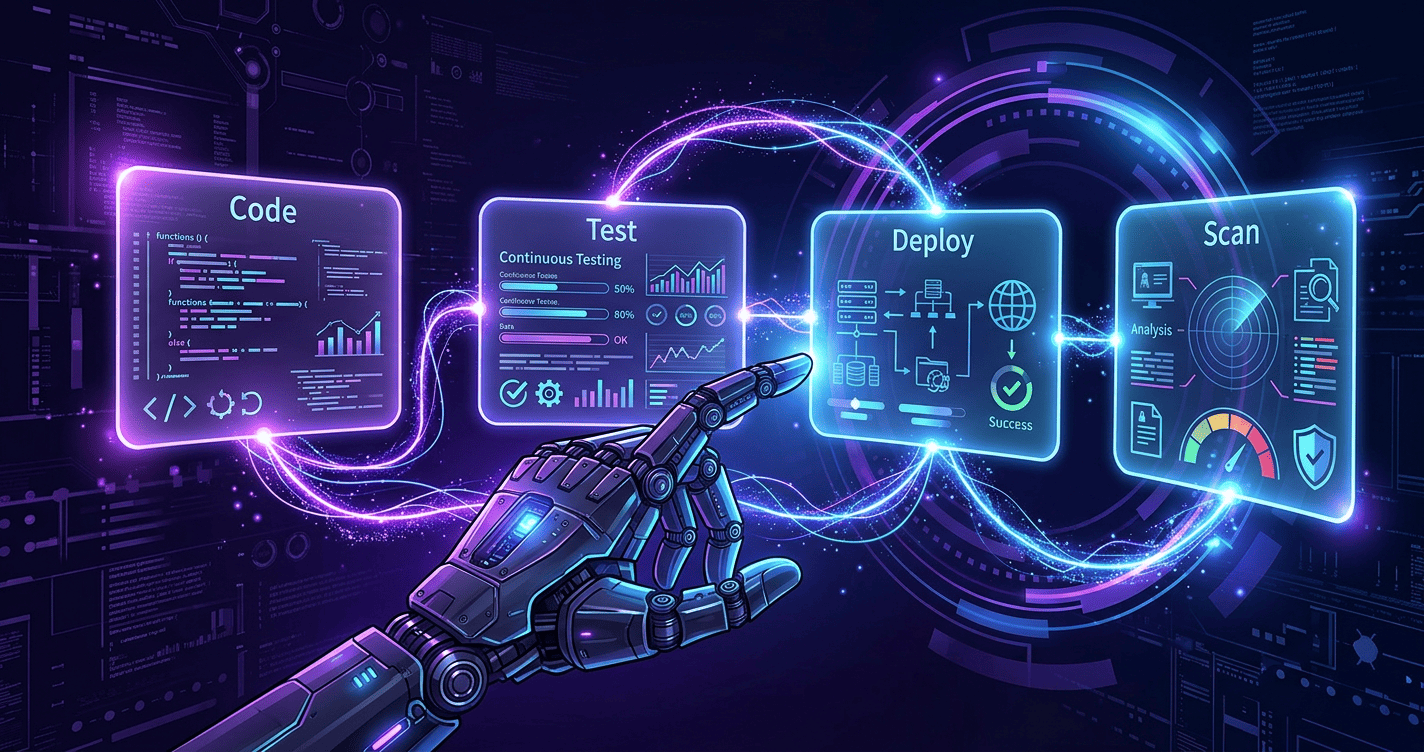
This guide covers what changes in agent behavior, how to design workflows that take advantage of Capybara’s improvements, and what the practical impact looks like.
What Is Wrong with Current Agent Workflows
Before understanding what Capybara improves, you need to understand where current agents fail. These are not edge cases — they are systematic problems that every developer building autonomous AI workflows encounters.
The Cascading Failure Problem
Current agent workflows fail disproportionately as the number of steps increases. A 3-step workflow might succeed 90% of the time. A 10-step workflow with the same per-step success rate succeeds only 35% of the time (0.9^10). By 20 steps, the success rate drops to 12%.
This math makes long autonomous chains impractical with current models. Developers compensate by breaking workflows into short segments with human checkpoints — which defeats the purpose of autonomous execution.
Capybara’s “fewer failures in long chains” directly addresses this. Even a modest improvement in per-step reliability — from 90% to 95% — changes the math dramatically. A 10-step workflow goes from 35% to 60% success. A 20-step workflow goes from 12% to 36%. A qualitative improvement in per-step reliability creates exponential improvement in long-chain success.
The Wrong Decision Problem
Current agents sometimes make confident but incorrect decisions — proceeding when they should stop, choosing the wrong tool, or misinterpreting intermediate results. These errors are particularly costly because they may not be immediately visible. An agent that silently makes a wrong decision at step 5 of a 15-step workflow wastes all computation from step 6 onward.
Capybara’s “better judgment about when to pause for human input” addresses the most damaging variant of this problem. A model that recognizes uncertainty and asks for clarification, rather than guessing and proceeding, prevents cascading errors.
The Context Loss Problem
Long workflows require maintaining context across many steps. Current models sometimes lose track of earlier decisions, producing inconsistent results — like modifying a configuration file in a way that contradicts changes made ten steps earlier.
Capybara’s “deep connective tissue between ideas and knowledge” suggests improved context maintenance across long operation chains. The model reportedly tracks relationships between earlier and later steps more reliably.
How Capybara Agent Capabilities Work
The specific improvements described in leaked documents map to concrete changes in agent behavior.
Multi-Step Consistency
Capybara maintains consistency across complex task chains. If step 3 establishes a convention (like a naming pattern or error handling approach), step 15 follows the same convention. If step 7 makes a decision with downstream implications, step 12 accounts for those implications.
For coding agents, this means a refactoring task that touches 20 files produces changes that are internally consistent — not 20 independent modifications that happen to affect the same codebase.
Tool Use Optimization
Agent workflows rely heavily on tool use — calling functions, executing commands, querying databases, reading files. Capybara reportedly improves in three dimensions of tool use.
Selection: choosing the right tool for each sub-task instead of defaulting to the most recent or most familiar tool.
Sequencing: ordering tool calls efficiently — not calling a build command before saving the file, or running tests before installing dependencies.
Interpretation: understanding tool output correctly and using results to inform the next step, rather than making assumptions about what a tool returned.
The Pause Decision
The hardest judgment call for an autonomous agent is when to stop and ask for human input. Too many pauses makes the agent useless. Too few means errors propagate.
Capybara’s improvement here is about calibrated confidence. The model reportedly has a better sense of what it knows versus what it is guessing. When the path forward is clear, it proceeds. When there is genuine ambiguity, it asks. This calibration is more valuable than raw capability improvements for real-world agent deployment.
Practical Workflow Examples
CI/CD Pipeline Agent
Current behavior (Opus): Set up CI config, install dependencies, run tests, fix failing tests, re-run. Often fails at the “fix failing tests” step — makes a fix that breaks something else, or fixes the wrong test. Requires 2-3 human interventions for a non-trivial pipeline.
Expected behavior (Capybara): Same task chain, but the model understands the relationship between the failing test and the rest of the test suite. Fixes are consistent with the codebase’s patterns. When a fix is genuinely ambiguous, the model pauses and asks rather than guessing. Expected result: 0-1 human interventions.
Security Audit Agent
Current behavior (Opus): Scan files for known patterns, report findings, suggest fixes. Works well for common vulnerabilities but misses novel patterns and cannot chain vulnerability findings into attack scenarios.
Expected behavior (Capybara): Proactively discovers unknown vulnerabilities, chains findings into attack scenarios (“this input validation flaw combined with this race condition enables privilege escalation”), suggests fixes that address root causes rather than symptoms. This is not an improvement to existing agent behavior — it is a new category of agent capability.
Codebase Migration Agent
Current behavior (Opus): Migrate files one at a time with frequent manual corrections. Loses consistency across files — migrates one module with one approach and another module with a different approach.
Expected behavior (Capybara): Understands the entire migration scope, establishes consistent patterns, tracks cross-file dependencies, and produces a complete migration that maintains consistency. Manual review shifts from “fix inconsistencies” to “verify intent.”
Designing Workflows for Capybara
Developers can optimize their agent architectures now to maximize Capybara’s capabilities.
Longer Chains, Fewer Checkpoints
With improved per-step reliability, you can design longer autonomous chains. Instead of breaking a workflow into 5 segments with 4 human checkpoints, try 2 segments with 1 checkpoint — or a single continuous chain with a checkpoint only at the end.
Start conservative and extend as you validate reliability. If a 10-step chain succeeds consistently, try 15. If 15 works, try 20.
Explicit Uncertainty Signals
Help the model exercise good judgment about when to pause by providing explicit instructions about uncertainty thresholds. For example:
If you are less than 80% confident about the correct approach, stop and ask before proceeding.
If any tool call returns an unexpected result, describe what happened and wait for guidance.
If the task requires modifying more than 5 files and you are unsure about cross-file consistency, ask for a review of your plan before executing.
These instructions give Capybara’s improved judgment concrete criteria to work with.
Rich Tool Definitions
Capybara’s improved tool use means your tool definitions matter more. A well-described tool with clear parameters, example inputs, and documented edge cases will be used more effectively than a minimal definition.
Invest time in tool descriptions, parameter documentation, and error response formats. The payoff increases with Capybara because the model is better at leveraging that documentation.
Evaluation and Feedback Loops
Build evaluation into your agent workflows. After each significant step, include a self-check: “Verify that the changes are consistent with the stated goal. If any inconsistency is found, describe it and stop.”
Capybara’s improved reasoning makes these self-checks more reliable — the model is better at catching its own mistakes, which further reduces failure rates in long chains.
Impact on the Agent Economy
Capybara’s agent improvements have implications beyond individual developer workflows.
Enterprise Automation
Many enterprise automation tasks have been blocked by agent unreliability. Complex document processing, multi-system data migration, compliance auditing across large organizations — these tasks require long, reliable chains that current models cannot consistently deliver.
Capybara’s improved consistency makes these previously impractical automations viable. The enterprise market for AI agents grows substantially when the reliability threshold crosses from “requires human babysitting” to “runs autonomously with review at the end.”
AI-to-AI Workflows
As agent capabilities improve, workflows involving multiple AI systems become practical. One agent handles data extraction, passes results to a second agent for analysis, which triggers a third agent for action. These AI-to-AI handoffs require the reliability that Capybara reportedly delivers.
The Human Role Shifts
Improved agent capabilities do not eliminate the human role — they change it. Instead of monitoring every step and intervening at failures, humans define goals, review outputs, and handle the genuinely novel situations that even Capybara cannot resolve.
The developer’s role shifts from “AI babysitter” to “AI director” — setting objectives, evaluating results, and making strategic decisions while the model handles execution.
Questions About Claude Capybara Agent Workflows
What are agent workflows in AI?
Agent workflows are multi-step autonomous tasks where an AI model executes a series of actions — calling tools, writing code, making decisions — without human intervention at each step. They enable AI to handle complex tasks end-to-end.
How does Capybara improve agent workflows?
Three specific improvements: greater consistency across multi-step tasks (fewer cascading errors), fewer failures in long chains (better per-step reliability), and better judgment about when to pause for human input (calibrated confidence).
Can Capybara agents work completely without humans?
For many tasks, yes — but human review remains important. Capybara reduces the frequency of human intervention needed, but complex, ambiguous, or high-stakes tasks still benefit from human oversight at key decision points.
What tools can Capybara agents use?
Any tool available through the Claude API — file operations, code execution, database queries, web searches, custom functions. The same tool definitions that work with Opus work with Capybara. The model is simply better at selecting, sequencing, and interpreting tools.
How do I build agent workflows with Claude?
Use the Claude API’s tool use feature to define available tools, then structure prompts that describe multi-step goals. Start with Opus for development, then switch to Capybara when available by changing the model parameter. No code changes needed beyond the model name.