
Claude Capybara Capabilities: The 6 Core Features of Anthropic’s Most Powerful Model
Leaked internal documents identify six specific capability areas where Claude Capybara dramatically outperforms previous models. Anthropic confirmed the model exists and described it as a “general purpose model with meaningful advances in reasoning, coding, and cybersecurity” — but the leaked files go further, detailing capabilities in agent workflows, vulnerability discovery, and cross-domain reasoning that represent genuinely new territory for AI systems. Our agent workflow improvements guide explores this in depth.
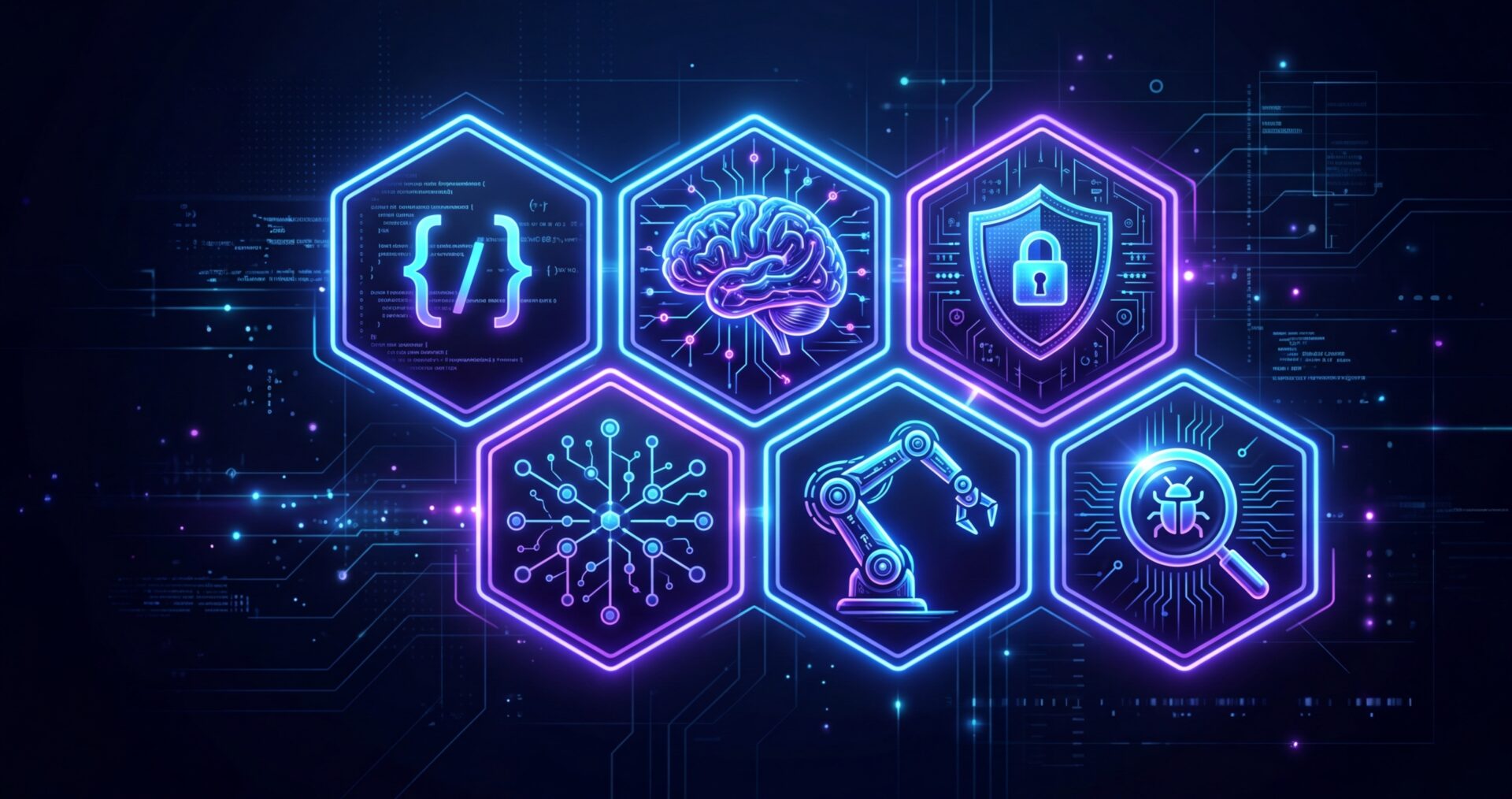
Here is each capability explained with what it means in practice and how it compares to what’s currently available.
The Six Capabilities at a Glance
| # | Capability | Improvement vs Opus 4.6 | Key Application |
|---|---|---|---|
| 1 | Advanced Code Generation | Dramatically higher | Large codebase refactoring |
| 2 | Academic Reasoning | Significantly improved | Scientific analysis, proofs |
| 3 | Cybersecurity Excellence | Far ahead of all AI | Vulnerability assessment |
| 4 | Multi-Step Reasoning | Qualitative leap | Cross-domain synthesis |
| 5 | Agent Workflows | Greater consistency | Autonomous task chains |
| 6 | Vulnerability Discovery | New capability class | Zero-day identification |
Capability 1: Advanced Code Generation
Claude Opus 4.6 already scores 80.8% on SWE-Bench Verified, making it one of the best coding models available. Capybara’s “dramatically higher” coding scores suggest a model that can handle problems that current AI coding assistants fail on.
What This Means in Practice
The improvement is not about writing simple functions faster. At the level Capybara reportedly operates, the practical applications shift toward genuinely difficult coding challenges: refactoring entire codebases with hundreds of files while maintaining consistency, debugging complex concurrency issues that involve race conditions across distributed systems, designing novel algorithms for problems where no standard solution exists, and generating production-ready code across multiple programming languages with framework-specific best practices.
How It Compares
Opus 4.6 and GPT-5.4 are roughly tied on Terminal-Bench 2.0 at ~81.8%. On SWE-Bench Verified, Opus leads at 80.8% vs GPT-5.4’s 77.2%. If Capybara improves Opus’s coding by even 5 points, it would hold the undisputed lead across all major coding benchmarks — a position no single model currently holds.
Capability 2: Academic Reasoning
Anthropic’s leaked documents describe “significantly improved” performance on academic reasoning tests. With Opus 4.6 already scoring 91.31% on GPQA Diamond (the highest among all public models), “significantly improved” places Capybara approaching human expert ceiling territory.
What This Means in Practice
Academic reasoning at this level enables proving and verifying mathematical theorems with high reliability, analyzing scientific papers and identifying methodological flaws, constructing logical arguments across complex multi-step chains, and synthesizing research from multiple fields into coherent analysis.
The gap between current models and human experts on graduate-level science questions is approximately 5-8 percentage points. Capybara reportedly narrows this gap significantly, potentially reaching 94-97% on GPQA Diamond.
The ARC-AGI-2 Dimension
Perhaps more telling is performance on ARC-AGI-2, which tests novel reasoning and pattern recognition. Opus 4.6 scores 68.8% versus GPT-5.2’s 54.2% — a 14.6-point lead. Capybara pushing past 80% on this benchmark would demonstrate reasoning capabilities that researchers considered years away from current architectures.
Capability 3: Cybersecurity Excellence
This is the capability that dominates headlines and moved stock prices. Anthropic’s internal assessment uses their strongest language here: the model is “currently far ahead of any other AI model in cyber capabilities.”
The Specific Claims
The leaked documents describe three cybersecurity dimensions. The model can proactively discover vulnerabilities in software systems before they are known to anyone. It can analyze the full attack surface of complex infrastructure, identifying every potential entry point. And it can assess security architecture at a level that “presages an upcoming wave of models that can exploit vulnerabilities in ways that far outpace the efforts of defenders.”
Why This Crashed Stocks
CrowdStrike fell ~7%, Palo Alto Networks ~6%, and Fortinet 4-6% after the leak. The market reasoning: if an AI model can find vulnerabilities faster than security companies can patch them, the entire defensive cybersecurity business model faces disruption. Whether this fear is justified depends on whether the capabilities translate from controlled benchmarks to real-world systems.
The Dual-Use Reality
Every cybersecurity capability is inherently dual-use. A model that finds vulnerabilities for defenders can find them for attackers. This is why Anthropic created a separate tier and why early access is restricted to cyber defense organizations — giving defenders tools to harden their systems before the capability becomes widely available.
Capability 4: Complex Multi-Step Reasoning
The leaked materials describe Capybara’s ability to “create deep connective tissue between ideas and knowledge.” This is not just faster reasoning — it suggests a fundamentally different approach to how the model connects information across domains.
What “Deep Connective Tissue” Means
Current AI models reason well within a single domain. Ask Opus about software architecture, and it draws on software engineering knowledge. Ask about molecular biology, and it draws on biology knowledge. The domains rarely cross-pollinate.
Capybara reportedly changes this. The “deep connective tissue” description suggests the model can identify structural similarities between problems in completely different fields — recognizing that a supply chain optimization problem shares mathematical structure with a protein folding challenge, or that patterns in financial market behavior mirror dynamics in ecological systems.
Why This Matters
Cross-domain reasoning is one of the capabilities most associated with human expertise. A doctor who also understands engineering can solve medical device problems that neither discipline handles alone. If Capybara can reliably perform this kind of synthesis, it opens applications in interdisciplinary research where insights from one field illuminate problems in another, strategic planning that requires balancing technical, economic, and social factors, and complex system design where multiple domains interact.
Capability 5: Enhanced Agent Workflows
Agent workflows involve AI models executing multi-step tasks autonomously — writing code, running tests, fixing errors, deploying changes, all without human intervention at each step. Capybara shows greater consistency in these autonomous chains.
What Changed
The improvement is about reliability over long chains. Current models like Opus 4.6 (through Claude Code) can execute impressive multi-step workflows, but reliability degrades as chains grow longer. A 95% success rate per step becomes 60% over 10 steps and 36% over 20 steps.
Capybara’s enhanced agent workflows reportedly improve the per-step success rate enough that long chains remain reliable. The model also shows better judgment about when to proceed autonomously versus when to pause for human input — reducing both unnecessary interruptions and silent failures.
Practical Applications
More reliable autonomous coding agents that can handle feature development from specification to deployment. Complex deployment pipelines that adapt to unexpected issues. Multi-tool orchestration where the model coordinates between different APIs and services to accomplish goals that span multiple systems.
Capability 6: Vulnerability Discovery
While cybersecurity excellence (#3) describes the broad domain, vulnerability discovery is a specific operational capability — automated, proactive, and at scale.
Zero-Day Identification
A zero-day vulnerability is a software flaw that no one knows about — not the developers, not security researchers, not attackers. Finding zero-days currently requires deep expertise and significant time investment. Capybara reportedly automates this process at a speed and scale impossible for human teams.
How It Works
Based on the leaked capability descriptions, the model can analyze source code for patterns that indicate exploitable vulnerabilities, test system configurations for common and uncommon misconfigurations, and identify attack vectors that chain multiple minor issues into significant exploits. The automation element is key: a human security researcher might find one zero-day per quarter. An AI operating at Capybara’s described capability level could potentially scan entire codebases and identify multiple vulnerabilities in hours.
The Scale Problem
This capability is what makes Anthropic most cautious about release. A model that finds zero-days at scale is either the most powerful defensive security tool ever created or the most dangerous offensive weapon in cybersecurity — depending entirely on who controls it.
How Capabilities Compare to Current Models
| Capability | Opus 4.6 | GPT-5.4 | Capybara (projected) |
|---|---|---|---|
| Coding (SWE-Bench) | 80.8% | 77.2% | ~85-90% |
| Reasoning (GPQA) | 91.31% | ~88% | ~94-97% |
| Novel reasoning (ARC-AGI-2) | 68.8% | 54.2% | ~78-85% |
| Cybersecurity | Good | Limited claims | “Far ahead of all AI” |
| Agent reliability | Good | Good | Greater consistency |
| Vulnerability discovery | Basic | Basic | Automated at scale |
The clearest advantage is in cybersecurity and vulnerability discovery — areas where neither Opus nor GPT-5 have comparable capabilities. Coding and reasoning improvements, while dramatic, build on existing strengths. Cybersecurity represents genuinely new territory.
Questions About Claude Capybara Capabilities
What are the 6 capabilities of Claude Capybara?
Advanced code generation, academic reasoning, cybersecurity excellence, complex multi-step reasoning, enhanced agent workflows, and vulnerability discovery. These were identified in leaked internal documents and partially confirmed by Anthropic.
Which capability is the most important?
Cybersecurity is the standout — described as “far ahead of any other AI model.” It is the primary reason Anthropic created a new tier and the reason the release strategy prioritizes cyber defenders.
Can Claude Capybara replace human programmers?
Not entirely. At ~85-90% SWE-Bench (projected), it would solve most standard coding tasks but still fail on approximately 1 in 10 real-world problems. It is a dramatic productivity multiplier, not a complete replacement for human engineering judgment.
What does “deep connective tissue” mean for Capybara?
It describes the model’s ability to synthesize insights across different knowledge domains — finding structural similarities between problems in biology, economics, engineering, and other fields. This represents a qualitative leap beyond current models that reason primarily within single domains.
Is vulnerability discovery the same as hacking?
The underlying technique is similar — finding exploitable flaws in software. The difference is intent and authorization. Defensive vulnerability discovery (finding and fixing flaws before attackers do) uses the same capabilities as offensive hacking but for protective purposes.
How do Capybara’s capabilities compare to GPT-5?
Capybara reportedly exceeds Opus 4.6, which already leads GPT-5.4 on most benchmarks. The largest gap is in cybersecurity, where GPT-5 has no comparable positioning. Coding and reasoning advantages are significant but smaller.